Do you know what is very scary? Great heights? Yeah sure, they can be scary. But what’s even scarier than that? A bad film-to-game adaptation! Yikes! Now to be fair, we have had the odd film-to-game adaption which is truly tremendous. Lord of the Rings, Peter Jackson’s King Kong, or the cult classic X-Men Wolverine Origins. But taking something so beloved and treasured, like a Hitchcock film, but one of his considered masterpiece films, Vertigo, and make that into a game? Well, that could be either in extremely poor taste or something truly marvelous if pulled off successfully.
So, can this (sort of) adaption of a beloved thriller join the greats of film to gaming adaptions? Or will it end up with the likes of Terminator Salvation, Green Lantern, Thor, Avatar, Cat Woman, Amazing Spiderman, Batman Forever, 007 Legends, most of the Shrek games…. Oh lord, I’ll stop.
What is Alfred Hitchcock’s Vertigo?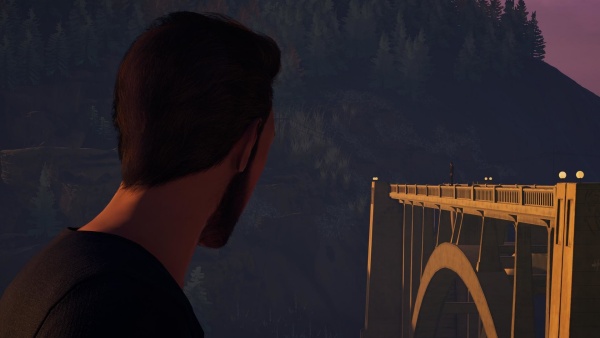
Now, in all fairness, I’m not a massive Hitchcock fan. My family loves the guy’s films and I’ve never really been into them. I totally respect him as a legendary filmmaker, but I never found myself being that keen on most of his work. Although I do like Strangers on a Train and The Birds. But clearly, the developers of this adaption are huge fans and have in all fairness made a faithful adaption from film to game.
But having any of his work be made into video game format could be considered controversial. But seeing how gaming as a medium has evolved so much and the likes of Tell-Tales “The Walking Dead” (which the developers clearly took a lot of notes from) really does show the benefits of strong story-based content as a video game. So, why not make one of his films into a video game? You can easily replicate his style and vision into video game format and cleverly work around implementing interesting dynamics into the gameplay.
Alfred Hitchcock’s Vertigo is a sort of adaption, loosely based on the concept of 1958 film. Where we see a troubled author facing his fear and repressed memories head-on as his world slowly crumbles around him. After a series of events, everything in his life begins to spiral out of control and his fear of heights is not helping in matters.
An original story that beautifully mimics the work of Hitchcock with a modern twist and implements some neat gameplay mechanics.
Visuals and presentation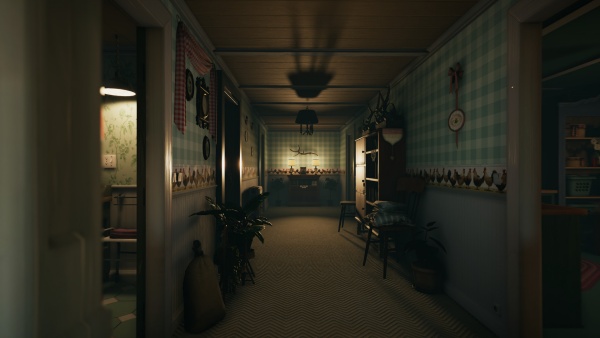
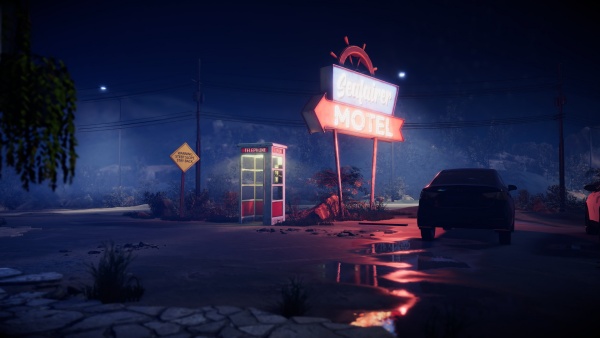
From the get-go, you can clearly see the Tell-Tales Inspiration with Vertigo’s visuals. Offering the same charming, cell-shaded visual style, that’s colourful and pleasant, is no different here than it was in The Walking Dead games. There are some small differences, such as less line work in Vertigo and some surreal moments where everything is visually striking and mind-blowing. These are a couple of things that make it stand apart and the developers have also managed to capture many camera tricks and photography principles of the great director himself. So massive points for doing so here.
The only real downside is with the sound design and voice work. While many of the actors do an incredible job at times, often there are moments that feel really off. Characters will seamlessly lose interest in the discussion and sound as though they just don’t care. Or leave way too many gaps in the delivery that I feel they’re imitating William Shanter. But there were also the odd sound glitches where a line wouldn’t play out or would clip in at the start.
The music, however, fares better and adds to the intensity and atmosphere like any of Hitchcock’s films would.
storyNow I won’t give too much away, but there will be some light spoilers.
Players will take on the role of Ed Miller (along with several other characters in the game), a renowned author who finds themselves in counseling after an extremely traumatic event involving a car accident, which has now given him Vertigo. For those unaware Vertigo is an extreme fear of heights, even those which are life non-life-threatening. Thus, Ed is confounded to his bed and unable to leave his comfort zone.
Ed remembers very little about the event and is unsure of what the full picture is. However, things only get stranger when the people Ed was within the car are nowhere to be found. He claims his passengers were his wife and daughter, but according to records and other people's testimonies, they never existed. What really happened and why does Ed believe his family died when they supposedly never existed? Has Ed had an episode caused by his condition? Or is there something more sinister at work?
Ed’s memories can’t be trusted, but also no one else can be either it seems. It’s time to find the truth by any means possible. With the help of hypnotherapy, Ed is able to revisit previous memories he thought were long lost, in a bid to piece everything together. Going back to recent memories and even childhood, players will gain an insight to the unknown parts of Ed’s life, the segments he has long forgotten, and deduce what is a lie and what is truth. Battling surrealistic nightmares posing as memories, putting together the fragments of his former life to determine what happened only a few weeks ago.
You’ll take control of Ed and several other characters, in a bid to solve the mystery. Including a local sheriff who investigates certain scenes of interest relating to Ed, Julia, a renowned hypnotherapist who runs Ed’s sessions. But more importantly, you play as Ed in both adult and child versions.
Vertigo has multiple layers to its story, with great pacing for the most part, and plenty of payoffs to the most important questions. Did Ed have a wife and daughter? Who is the mysterious figure Ed sees falling to their death? What is Ed repressing within his childhood memories? There are plenty of interesting questions and also great conclusions to make this a gripping mystery even Hitchcock would be proud of!
Although I feel the only real letdowns were some unnecessary events that really had no bearing on the story at all. Not even offer a great gameplay dynamic and just ate up time. But also, the fact that the choices you make, no matter what they are, have no real impact on the ending. Don’t be mistaken, the story beats and end-all follow a linear path, much like The Walking Dead games, there seem to be plenty of paths to embark on, but they all lead to the same place.
Gameplay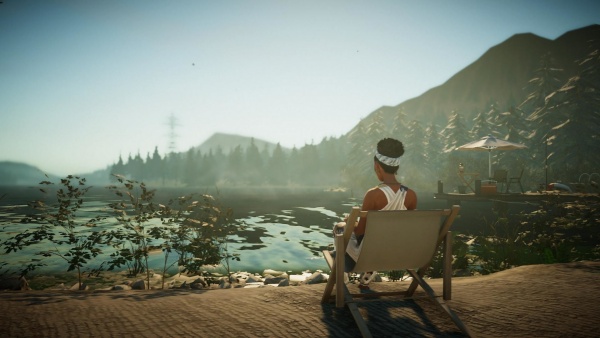
As previously mentioned, you can see the Tell-Tale inspiration for the visuals, but that also runs into the gameplay.
Players will explore the world of Vertigo, gathering clues, speaking to characters of interest, and completing the odd task here and there to unravel the grand mystery. Each character in Vertigo has their important tasks to handle, whether it’s investigating a crime scene, piecing together notes from a hypnotherapy session, or diving into a series of repressed memories, playing will see a journey that’s quite varied in tone.
Most of the gameplay loop is simple and easy to grasp, whether it’s just finding key items or speaking with characters, where you can decide to be either intuitive, aggressive, or just plain rude to someone during a conversation. Oh, and writing out an angry email as well.
While there is a varied selection of tasks to do, they’re all quite light and without much substance. The puzzle elements are rather unchallenging, resorting most of the time to wandering around and picking up an item to examine. The game isn’t so easy it’s airplane mode style of gameplay, as there is some light work to do to progress. But neither is it challenging or though-provoking as the main story is.
You get the odd QTE here and there to make up the more energetic segments, but again these aren’t frequent nor are they really that interesting. Where the game could have been utterly compelling, linking the compelling story to some dynamic gameplays were in the hypnotherapy sessions. What we get is a dive into a few memories and figure out what is truth and what isn’t. These were quite interesting and deducing through observation what is truth and what could be a lie covering up a traumatic event was very neat. But with the lack of dynamic choices in the game, it really didn’t have the same impact, nor did it make me afraid of picking the wrong answer.
Then there are other moments that do feel tacked on and a little underwhelming. A couple of very tedious and slow set pieces had no need to be here.
What Alfred Hitchcock’s Vertigo does wellThe story is very well constructed and intriguing throughout. I did find some issue with attaching the name of Alfred Hitchcock onto this project, as it’s not really needed. This could easily stand on its own with its very engaging plot and good pacing. Along with the compelling themes and twists the game has around every corner. While there were some off moments with certain characters, and some of the gameplay didn’t enhance the story whatsoever, I found that Vertigo held my attention right until the very end.
The visual style is nice, and the soundtrack is a wonderful compliment too. This truly felt like a faithful adaption or more so a homage to the great director, with surprisingly good results. The gameplay, while mostly unoriginal does fit the tone of the game, and the new ideas with the hypnotherapy sessions added another layer to make the journey a little more compelling.
The dramatic choices, difficult decisions, and moments of dread-inducing remembrance for Ed are all enthralling in so many ways. But are let down somewhat due to the very linear nature of the plot. But there were still plenty of moments, where I truly felt immersed and tense at what could potentially happen next.
What Alfred Hitchcock’s Vertigo could do betterAs mentioned, previously, the element of choice felt a little tacked on or unfulfilled by the end, realising that the choices really don’t add anything to the plot in the grand scheme of things. It reminded me of 2011’s Catherine, where you play Vincent, a guy who cheats on his long-term girlfriend (sorry, spoilers) and ends up becoming more and more distant from her. You are given moments of choices and free will, to try and make amendments throughout the game. But no matter what, Vincent is unlikeable and always goes with one singular path. It annoyed me that the choice was given, yet it had no effect on the story and the conclusion was always set in stone.
While the story is very gripping, there is an argument to be made against the implementation of choice here, as the conclusion will always be the same.
The gameplay overall is not as compelling as the story, and I felt more could’ve been done to create an enthralling and suspenseful trip through madness and fear. It shocked me that the Vertigo aspect really doesn’t play much into the gameplay, or the developers really didn’t push the more surreal elements during the hypnotherapy sessions. It’s all the same kind of stuff you played back in 2012 with the Tell-Tale games.
Lastly, I did find some of the performances a little lacking in their delivery. There’s nothing more annoying than having a great story and for it to be ruined by a bad performance. Nothing too awful, but you do notice at times some actors just lose interest in what they’re saying or just feel bored with the situation.
Overall?Alfred Hitchcock’s Vertigo offers a compelling and hardened mystery from start to finish, which would satisfy long-term fans of the director or those who love a good story. While I would consider this more an interactive visual novel, as the gameplay is not very stimulating most of the time, there is still plenty of charm with the title. There are some neat ideas, a great story, and everything is handled confidently. If the gameplay was expanded upon, or refined to be more interesting than just your typical QTEs and multiple dialogue choices, I think this could have been absolutely great. But it’s an engaging and well-put-together mystery adventure that hopefully won’t keep you up at night (or maybe if you like that sort of thing).
++ Great mystery with plenty of twists and turns
+ Nice visuals and soundtrack
+ Some neat gameplay ideas
- Other areas of gameplay could have been expanded upon
- Choices feel a little meaningless by the end
A Steam key of Alfred Hitchcock’s Vertigo was provided by the publisher for the purpose of this review.